
Preventing Blockages and Downtime in Food & Beverage Manufacturing
8 April 2026
In the food and beverage industry, maintaining continuous production is critical to profitability. However, one of the most common — and often underestimated — causes of disruption is process blockages.
Whether in pipelines, pumps, valves, or processing equipment, blockages can quickly lead to unplanned downtime, product loss, and costly maintenance.
The good news?
With the right approach and process instrumentation, many of these issues can be prevented before they impact production.
Why Blockages Occur in Food Processing
Food and beverage processes often involve complex materials with varying properties, including:
- High viscosity liquids (e.g. syrups, cream, yoghurt)
- Suspended solids (e.g. fruit pieces, grains)
- Crystallising products (e.g. sugar solutions)
- Temperature-sensitive materials
These characteristics make processes more susceptible to build-up, fouling, and eventual blockage.
Common causes include:
- Inadequate flow velocity
- Temperature fluctuations causing product thickening or crystallisation
- Poorly designed or maintained CIP systems
- Residue build-up in pipelines and equipment
- Incorrect or inconsistent process control
The Impact of Blockages on Production
Even minor blockages can have major consequences:
- Unplanned downtime and production delays
- Increased maintenance and cleaning costs
- Loss of product and reduced yield
- Potential contamination risks
- Disruption to downstream processes
For manufacturers focused on efficiency and output, preventing these issues is essential.
How Process Instrumentation Prevents Blockages
Modern process instrumentation in food and beverage manufacturing provides the visibility needed to detect early warning signs and prevent blockages.
Monitoring Flow to Detect Irregularities
Flow meters play a critical role in identifying potential blockages.
A sudden drop or fluctuation in flow rate can indicate:
- Partial blockages forming in pipelines
- Pump inefficiencies
- Product build-up
By detecting these changes early, operators can intervene before a complete blockage occurs.
Temperature Control to Prevent Product Build-Up
Temperature is a key factor in many blockage scenarios.
For example:
- Cooling can cause fats to solidify in dairy processes
- Temperature drops can lead to sugar crystallisation
- Incorrect heating can increase viscosity
Accurate temperature sensors ensure that products remain within optimal ranges, preventing conditions that lead to blockages.
Pressure Monitoring for Early Warning Signs
Pressure sensors provide another critical layer of protection.
An increase in upstream pressure or a drop downstream can signal:
- Restricted flow
- Build-up within equipment
- Developing obstructions
Real-time pressure monitoring allows for rapid identification and resolution of issues.
Level Measurement to Avoid Overflows and Build-Up
Level sensors help manage storage tanks and process vessels effectively.
Overfilling or poor level control can contribute to:
- Product accumulation
- Inefficient flow conditions
- Increased risk of blockage
Accurate level measurement ensures smooth and controlled movement of product through the system.
Optimised CIP to Prevent Residue Accumulation
Effective clean-in-place (CIP) systems are essential for preventing blockages caused by residue build-up.
Instrumentation such as conductivity and temperature sensors ensures that cleaning cycles are:
- Thorough and effective
- Consistent and repeatable
- Optimised to remove all product residues
This reduces the likelihood of build-up over time, a common cause of recurring blockages.
Hygienic Instrumentation: A Critical Requirement
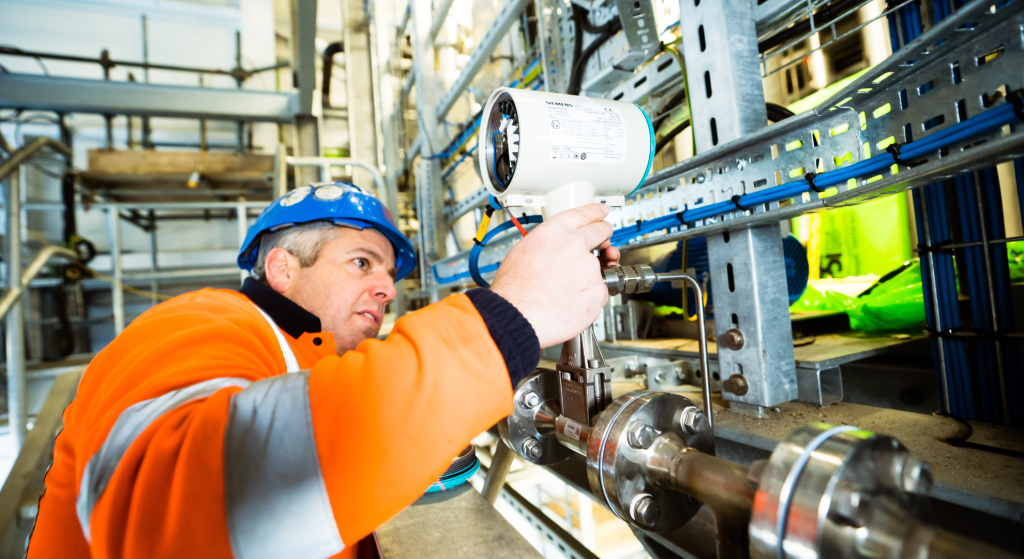
In food and beverage applications, instrumentation must not only be accurate but also hygienic.
Hygienic instrumentation is designed to:
- Prevent product build-up on sensor surfaces
- Withstand frequent cleaning cycles
- Meet industry standards such as EHEDG and FSA
This ensures reliable performance while maintaining food safety and compliance.
Benefits of Preventing Blockages
By proactively preventing blockages, manufacturers can achieve:
- Reduced downtime in food manufacturing
- Improved production efficiency and throughout
- Increased product yield and reduced waste
- Lower maintenance and cleaning costs
- Enhanced compliance and product safety
Ultimately, prevention is far more cost-effective than reactive maintenance.
A Data-Driven Approach to Efficiency
The key to preventing blockages lies in real-time visibility.
By combining data from flow, temperature, pressure, level, and analytical sensors, manufacturers can:
- Identify trends and potential risks
- Optimise process conditions
- Maintain stable and efficient operations
This data-driven approach supports continuous improvement and long-term reliability.
Blockages are a common challenge in food and beverage manufacturing — but they don’t have to be inevitable.
With the right process instrumentation, manufacturers can detect early warning signs, optimise processes, and prevent disruptions before they occur.
The result is a more efficient, reliable and profitable operation.