
Frequently Asked Questions About Flow Meter Process Instrumentation
7 May 2026
Flow meters are some of the most widely used instruments across process industries, helping businesses accurately measure liquids, gases, and steam in a wide range of applications. Whether it’s monitoring water usage, controlling chemical dosing, or measuring fuel transfer, flow meters play a vital role in improving efficiency, maintaining product quality, ensuring safety, and controlling costs.
If you’re considering a new installation or reviewing your current setup, understanding how flow meters work and where they are used can make a big difference. This guide explores the most common questions in a simple, easy-to-read format, with practical insights drawn from real-world solutions such as those provided by Process Instrument Solutions.
What is a Flow Meter?
A flow meter is an instrument used to measure the rate or total quantity of fluid flowing through a pipe or system. This can include:
- Volumetric flow (e.g. litres per minute, m³/hr)
- Mass flow (e.g. kg/hr, tonnes/hr)
- Totalised flow (cumulative usage over time)
- Instantaneous flow rate
Flow meters are used across a wide range of media including water, chemicals, gases, steam, oils, slurries, and aggressive fluids.
Why is Flow Measurement Important in Process Industries?
Accurate flow measurement underpins efficient and compliant operations. In UK industrial environments, flow meters are used to:
- Optimise production processes
- Reduce waste and energy consumption
- Ensure accurate dosing and batching
- Monitor utilities (water, gas, steam)
- Detect leaks and inefficiencies
- Support environmental compliance (e.g. discharge monitoring)
- Maintain consistent product quality
In sectors such as water treatment and energy, poor flow measurement can lead to regulatory penalties or significant cost overruns.
Where Are Flow Meters Used?
Flow meters are widely used across UK industry, including:
- Water & wastewater treatment plants
- Food & beverage manufacturing
- Chemical processing facilities
- Oil & gas terminals
- Power generation and energy plants
- Pharmaceuticals and life sciences
- HVAC and building services
- Marine and utilities
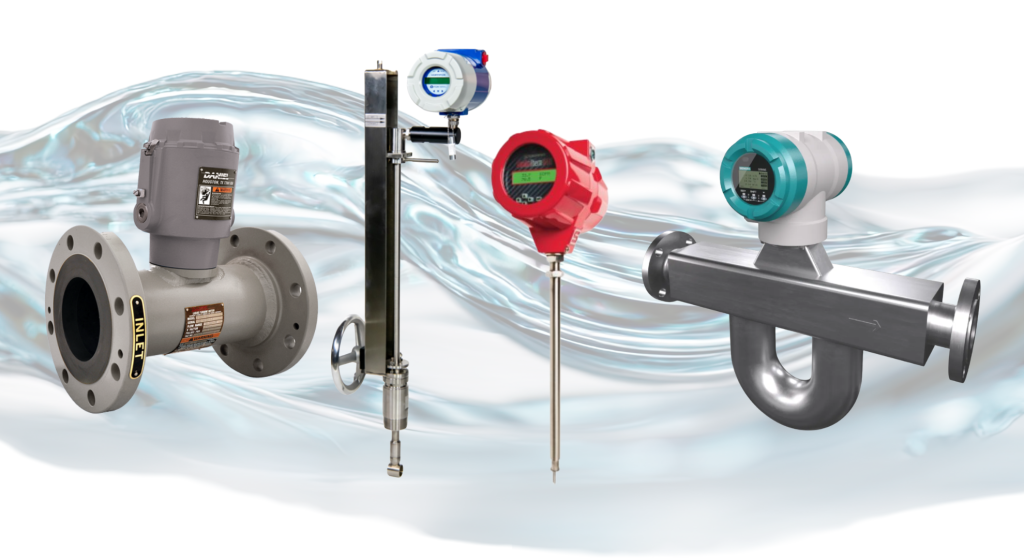
Flow meters are found in almost every industry where fluids are handled. This includes water and wastewater treatment, food and beverage production, oil and gas, chemical processing, pharmaceuticals, power generation, HVAC systems, marine applications, and utilities.
Companies like Process Instrument Solutions support these industries by providing tailored flow measurement systems designed to meet specific operational needs, particularly in demanding environments such as water treatment plants and industrial processes.
What Types of Flow Meters Are Available?
There are many flow meter technologies available, each suited to specific applications. Understanding their strengths and limitations is key.
Electromagnetic Flow Meters (Magmeters)
- Best for conductive liquids (e.g. water, wastewater, acids)
- No moving parts → low maintenance
- Highly accurate for liquid applications
- Not suitable for non-conductive fluids (e.g. oils)
Ultrasonic Flow Meters
- Ideal for clean liquids and large pipe sizes
- Clamp-on versions allow non-invasive installation
- Excellent for temporary monitoring and energy audits
- Accuracy depends on installation and fluid conditions
Coriolis Mass Flow Meters
- Direct mass flow measurement with very high accuracy
- Also measure density and temperature
- Widely used in chemical, pharmaceutical, and oil applications
- Higher cost but premium performance
Vortex Flow Meters
- Common for steam, gases, and clean liquids
- Robust and reliable in industrial environments
- Ideal for energy monitoring systems
Turbine Flow Meters
- Suitable for clean, low-viscosity liquids (e.g. fuels)
- High accuracy when conditions are stable
- Sensitive to contamination and flow profile
Positive Displacement (PD) Meters
- Excellent for custody transfer and billing applications
- High accuracy for oils and viscous fluids
- Mechanical design requires maintenance
Variable Area Flow Meters (Rotameters)
- Simple, cost-effective local indication
- No power required
- Typically used for low-flow or visual monitoring
Differential Pressure (DP) Flow Meters
- Traditional technology (orifice plates, venturis, pitot tubes)
- Widely used in legacy systems
- Suitable for high-pressure and high-temperature applications
- Requires correct installation for accuracy
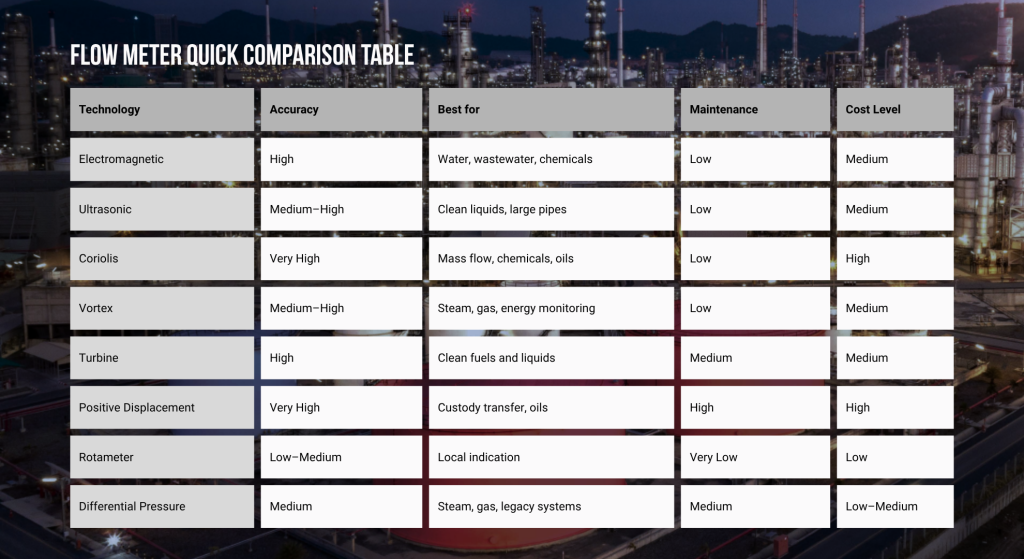
Use our Flow Meter Quick comparision table
How Do I Choose the Right Flow Meter?
Selecting the right flow meter depends on several key factors:
1. Fluid Type
- Liquid, gas, or steam?
- Conductive or non-conductive?
- Clean or containing solids?
2. Process Conditions
- Temperature and pressure
- Flow range and turndown
- Pipe size and layout
3. Accuracy Requirements
- Is this for monitoring or billing?
- Do you need high precision or trend data?
4. Installation Constraints
- Space availability
- Straight pipe requirements
- Can the process be shut down?
5. Compliance & Environment
- ATEX or hazardous area requirements
- Hygienic design (food/pharma)
- UK environmental regulations
Working with an experienced supplier like Process Instrument Solutions ensures the correct technology is selected and properly sized for your application.
What’s the Difference Between Mass Flow and Volumetric Flow?
Volumetric flow measures the volume of fluid passing through a system, such as litres per minute. Mass flow, on the other hand, measures the actual mass of the fluid, such as kilograms per hour.
Mass flow measurement is particularly useful when fluid density can change due to temperature or pressure variations, which is common in applications like chemical dosing or fuel measurement.

Flow meters can play a significant role in reducing operational costs.
Mass Flow vs Volumetric Flow – What’s the Difference?
- Volumetric flow measures the volume of fluid (e.g. m³/hr)
- Mass flow measures the actual mass (e.g. kg/hr)
Mass flow is preferred when density changes due to temperature or pressure—common in gas, steam, and chemical processes.
What Affects Flow Meter Accuracy?
Even the best flow meter can give poor results if installed incorrectly. Common issues include:
- Insufficient straight pipe runs
- Air or gas entrainment
- Partially filled pipes
- Vibration
- Incorrect orientation
- Electrical interference
- Build-up or fouling
- Poor grounding (especially for magmeters)
Correct installation and commissioning are critical.
Do Flow Meters Require Calibration?
Yes. Calibration ensures accuracy and traceability, particularly for:
- Billing and custody transfer
- Regulated industries
- Critical process control
Typical calibration intervals in UK industry range from annually to every 3–5 years, depending on application.
Many suppliers offer calibration and servicing support, helping to keep systems running accurately and efficiently throughout their lifespan.
Can Flow Meters Reduce Operational Costs?
Absolutely. Flow meters help identify:
- Water and energy waste
- Steam losses
- Inefficient processes
- Overdosing of chemicals
For example, temporary clamp-on ultrasonic meters are often used in UK energy audits to quickly identify savings opportunities without shutting down operations.
Are Flow Meters Used for Billing and Compliance?
Yes. Many industries use flow meters for:
- Utility billing (water, gas)
- Fuel transfer
- Chemical distribution
- Environmental discharge monitoring
These applications require certified, high-accuracy instruments that meet UK and international standards.
How Long Do Flow Meters Last?
Typical lifespan:
- Standard industrial meters: 10–20 years
- High-end systems: 20+ years with maintenance
Longevity depends on:
- Fluid type
- Operating conditions
- Maintenance practices
What Should You Look for in a Flow Meter Supplier?
A reliable UK supplier should provide:
- Application expertise and correct sizing
- Wide technology range
- Calibration and servicing support
- Commissioning assistance
- Fast technical support
- Knowledge of UK regulations and standards
Companies like Process Instrument Solutions offer end-to-end support, helping customers from initial selection through to installation and long-term operation.
Flow meter process instrumentation is essential for measuring and controlling fluids across a wide range of industries. Whether you’re monitoring water usage, measuring steam, controlling chemical dosing, or managing fuel transfer, the right flow meter can improve efficiency, reduce waste, and enhance overall process reliability.
Real-world solutions show that choosing the correct technology and working with experienced suppliers can deliver both operational improvements and cost savings.
If you’re unsure which flow meter is right for your application, start by understanding your fluid, operating conditions, and accuracy requirements. From there, finding the right solution becomes much easier.
By defining your process fluid, pipe size, temperature, pressure, and accuracy requirements, you can quickly narrow down the most suitable flow meter technology for your needs.