
Avoiding Contamination Between Brewing Cycles
7 May 2026
In modern brewing, consistency is everything. Whether producing craft ales or large-scale lagers, maintaining quality across batches is critical—not just for flavour, but for brand reputation and operational efficiency. One of the greatest threats to this consistency is contamination between brewing cycles. Microbial spoilage can lead to off-flavours, over-carbonation, haze, and ultimately product loss. Worse still, undetected contamination can result in costly recalls and long-term reputational damage.
This blog explores how contamination can occur between brews and how breweries can implement effective strategies, supported by modern instrumentation, to prevent it.
Understanding the Sources of Contamination
Contamination in brewing is primarily caused by microorganisms such as bacteria and wild yeast. Among the most common are lactic acid bacteria like Lactobacillus and Pediococcus, which account for a significant proportion of spoilage incidents. Wild yeasts, including Brettanomyces and Saccharomyces var. diastaticus, are also particularly problematic due to their ability to survive in harsh beer conditions and continue fermenting sugars unintentionally.
What makes contamination especially challenging is that it can originate from multiple points in the brewing process. Even after wort sterilisation, raw materials can introduce microbes. Additionally, contamination can persist within the brewery itself—on vessels, pipework, cooling systems, instrumentation, floors, and even in the air.
This means that contamination between brewing cycles is rarely due to a single failure; rather, it is often the result of insufficient cleaning, poor monitoring, or undetected microbial presence.
The Critical Risk: Cross-Contamination Between Batches
Between brewing cycles, equipment that is not properly cleaned and sanitised poses a key risk. Residual biofilms or trapped product in dead legs, seals, or valves can harbour spoilage organisms. These microbes can survive cleaning processes and contaminate subsequent batches.
Because many breweries do not pasteurise their beer, microbiological stability must be maintained at every stage. This makes prevention—not correction—the most effective strategy.
To minimise cross-contamination, breweries must adopt a holistic approach that includes:
- Rigorous Cleaning-In-Place (CIP) procedures
- Validation of cleaning effectiveness
- Environmental monitoring
- Routine microbiological testing

Best Practices for Avoiding Contamination
Implement End-to-End Quality Control
Contamination prevention must span the entire brewing process from raw materials to packaging. Monitoring only the finished product is not sufficient, as contamination risks increase throughout production and the supply chain.
Instead, breweries should establish critical control points and test regularly at each stage.
Maintain and Validate Cleaning Processes
Effective CIP systems are essential, but they must also be validated. This includes verifying:
- Chemical concentration
- Temperature and contact time
- Mechanical action (flow rates, turbulence)
Instrumentation solutions—such as flow, pressure, and analytical sensors—play a crucial role in ensuring cleaning processes are both consistent and effective. Companies like Process Instrument Solutions provide measurement technologies that help breweries monitor these parameters in real time, reducing the risk of ineffective cleaning cycles.
Monitor Equipment and Environment
Contamination is not limited to product-contact surfaces. Airborne microbes, poorly maintained cooling systems, and even floors can act as reservoirs of contamination.
Installing reliable instrumentation to monitor temperature, pressure, and flow in utilities such as water and air systems can help maintain hygienic conditions across the plant.
Use Rapid Microbial Detection Methods
Traditional microbiological testing methods can take days to return results, increasing the risk that contaminated batches will progress through production. In contrast, modern PCR-based techniques can detect spoilage organisms within hours by identifying their DNA.
Rapid detection allows breweries to:
- Identify contamination early
- Isolate affected batches
- Prevent spread to subsequent brews
Train Staff and Standardise Procedures
Even the best equipment and testing protocols are ineffective without proper human implementation. Staff should be trained to:
- Follow strict hygiene protocols
- Avoid cross-contact between clean and dirty equipment
- Take samples without introducing contamination
Standard operating procedures (SOPs) should be clearly defined and consistently followed.
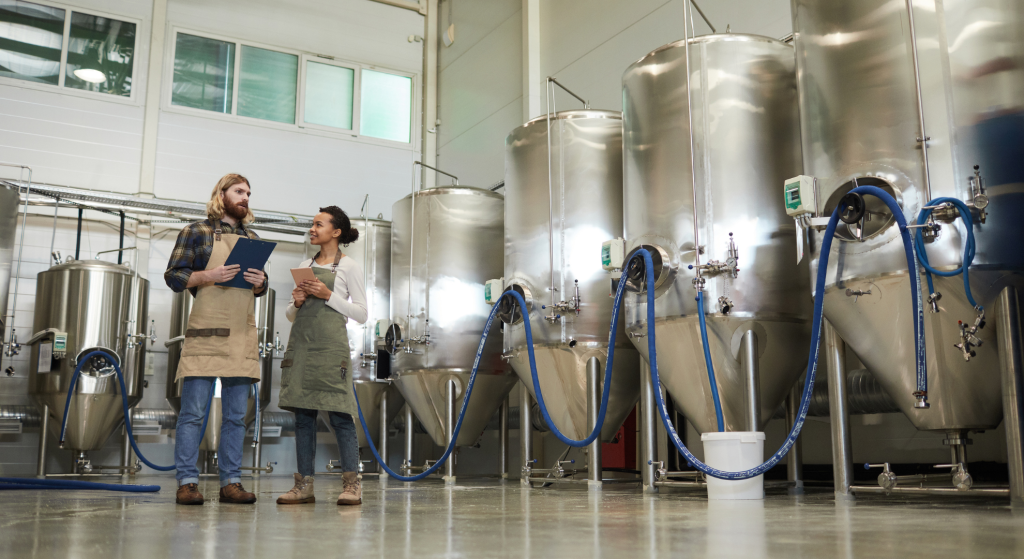
The Role of Instrumentation in Contamination Prevention
Modern breweries increasingly rely on advanced instrumentation to maintain process control and hygiene. Measurement solutions such as inline sensors for temperature, pressure, conductivity, and flow—enable brewers to verify that cleaning and production conditions remain within safe limits.
By integrating these tools into automated systems, breweries can:
- Ensure repeatable cleaning cycles
- Detect anomalies in real time
- Reduce reliance on manual checks
- Improve overall process reliability
Providers like Process Instrument Solutions support breweries with tailored instrumentation packages designed to enhance both process control and contamination prevention.
Avoiding contamination between brewing cycles requires more than just thorough cleaning; it demands a comprehensive quality-control strategy. From identifying microbial risks to implementing rapid detection and leveraging advanced instrumentation, breweries must take a proactive approach at every stage of production.
By combining robust hygiene practices with modern monitoring technologies, brewers can safeguard product quality, reduce waste, and maintain the consistency that customers expect.
In an increasingly competitive market, contamination prevention is not just a technical requirement—it is a cornerstone of long-term success.