
Reducing Product Loss During Transfer in Brewing
1 May 2026
In modern brewing, efficiency is not just about producing great beer—it’s about maximising yield while minimising waste. Product loss during transfer stages is one of the most persistent challenges for brewers, affecting profitability, sustainability, and process consistency.
From small craft breweries to large-scale operations, understanding where losses occur and how to reduce them can deliver significant operational benefits.
Understanding Product Loss in Brewing Transfers
Beer loss occurs throughout the brewing process, but transfers between vessels (e.g. kettle to fermenter, fermenter to bright tank, or packaging) are particularly critical points. During these stages, losses can arise from:
- Residual liquid left in pipework, hoses, and pumps
- Absorption into hop material and trub
- Inefficient push-out or incomplete transfers
- Measurement inaccuracies
Industry insights indicate that transfer and filtration stages routinely account for measurable losses due to beer remaining in equipment and process lines.
Even small inefficiencies can accumulate significantly over time, especially in high-volume operations.
Why Transfer Loss Matters
Reducing product loss is not just about saving beer—it directly impacts:
- Profitability – Less wasted product means higher yield per batch
- Sustainability – Reduced waste lowers environmental impact
- Process consistency – Improved control leads to repeatable quality
A structured analysis approach—such as conducting mass balances and reviewing pipework systems—has been shown to reduce losses by thousands of hectolitres annually in commercial breweries.
Key Causes of Loss During Transfer
Multiple Transfers
Each movement of wort or beer introduces loss. As many in the industry have highlighted, every transfer between vessels results in unavoidable product loss.
Trub and Sediment Retention
Hop material and sediment trap liquid, reducing recoverable volume. Highly hopped beers are especially prone to this issue.
Dead Volumes in Equipment
Pipework, valves, and tanks often retain residual product after transfer. Without optimisation, this “dead volume” becomes a consistent loss point.
Inaccurate Measurement and Control
Without precise instrumentation, brewers may overestimate transferred volumes or fail to optimise push-out processes.
 Practical Strategies to Reduce Transfer Loss
Minimise Unnecessary Transfers
Reducing the number of process steps is one of the simplest and most effective strategies. For example, eliminating secondary fermentation where possible can reduce cumulative losses.
Optimise Trub and Hop Management
- Use hop bags or strainers to limit absorption losses
- Improve whirlpooling and separation techniques
- Allow sediment to compact before transfer
These approaches reduce the amount of liquid trapped in solids.
Improve Transfer Efficiency with Push-Out Techniques
Optimising push-out volumes (e.g. using water, CO₂, or air) ensures more product is recovered from pipelines. Studies show that carefully calculated push-out settings can significantly reduce waste during transfers.
Enhance Measurement and Monitoring
Accurate measurement is essential for identifying and reducing losses. This includes:
- Monitoring flow rates during transfer
- Measuring volumes at each stage
- Tracking losses over time
Specialist providers such as Process Instrument Solutions emphasise the importance of reliable flow measurement, level sensing, and process instrumentation to improve visibility and control in brewing operations.
With better data, brewers can pinpoint inefficiencies and implement targeted improvements.
Use Equipment Designed to Reduce Loss
Certain equipment choices can significantly improve yield:
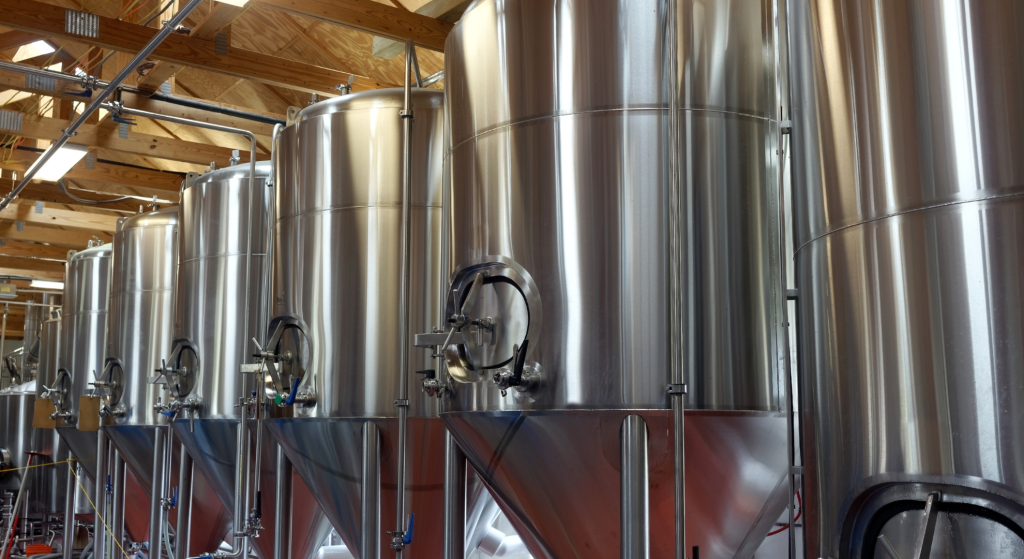
- Conical fermenters help compact sediment, reducing beer trapped in trub
- Efficient piping layouts minimise dead space
- Automated systems reduce human error during transfers
Apply Cooling and Clarification Techniques
Processes like cold crashing encourage sediment to settle into a tighter layer, allowing more clear beer to be transferred with less waste.

The Role of Data and Continuous Improvement
Reducing transfer losses is not a one-time fix—it requires continuous monitoring and optimisation. Best practices include:
- Maintaining detailed batch records
- Measuring pre- and post-transfer volumes
- Analysing trends to identify recurring losses
By combining process knowledge with accurate instrumentation, breweries can move from reactive troubleshooting to proactive optimisation.
Product loss during transfer is an unavoidable part of brewing—but it can be significantly reduced with the right strategies. By minimising transfers, improving separation techniques, optimising equipment, and leveraging accurate measurement systems, brewers can unlock higher efficiency and better margins.
Ultimately, every litre saved contributes not only to profitability but also to a more sustainable and controlled brewing process.