
How Real-Time Data Improves Product Consistency in Food & Beverage Industries
26 March 2026
In food and beverage manufacturing, consistency is everything.
Whether it’s the taste of a beer, the texture of a yoghurt or the purity of sugar, customers expect the same quality every time. For manufacturers, achieving that level of consistency across every batch, shift and production line is a constant challenge.
The difference today?
Real-time data.
Why Consistency Is So Challenging
Food and beverage processes are inherently variable. Raw materials change, environmental conditions fluctuate, and production demands continue to evolve.
Small deviations in process conditions — temperature, flow rate, pressure or concentration can lead to:
- Variations in taste, texture or appearance
- Product rework or waste
- Compliance risks
- Reduced yield and profitability
Traditionally, many processes relied on manual sampling or time-based control. But these approaches only provide snapshots of what’s happening, often after issues have already occurred.
The Shift to Real-Time Monitoring
Modern process instrumentation enables continuous, real-time measurement of critical process parameters.
Instead of relying on assumptions or delayed lab results, operators can now see exactly what is happening inside their process in real time.
Real-time sensor data allows manufacturers to move from reactive to proactive control, ensuring processes stay within tight tolerances at all times. This transition from periodic checks to continuous monitoring is key to improving product consistency.
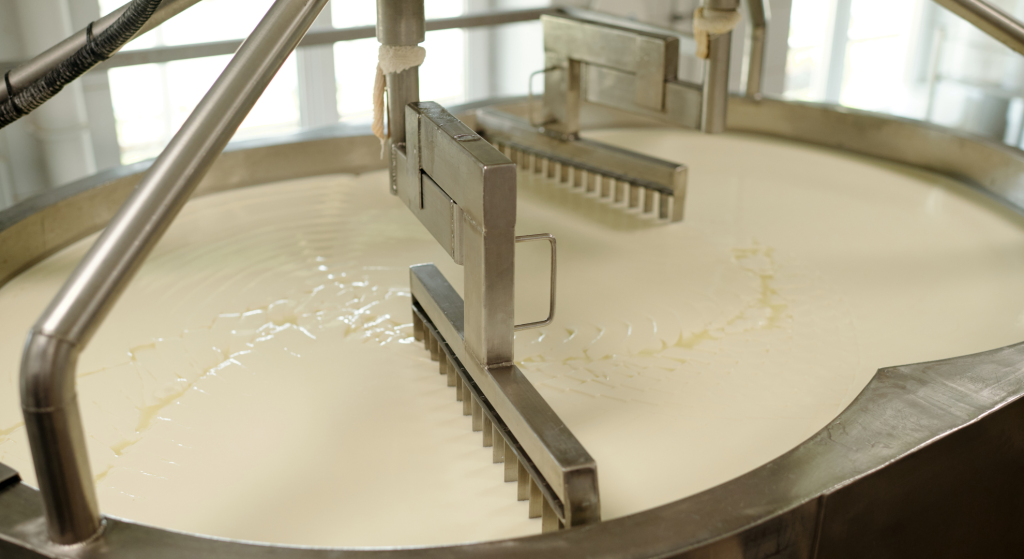
How Real-Time Data Drives Consistency
Immediate Detection of Process Deviations
Sensors measuring flow, temperature, pressure, and analytical values provide instant feedback when a process deviates from specification.
This allows operators to:
- Identify issues early
- Make adjustments before product quality is affected
- Prevent entire batches from being compromised
As one industry expert noted, sensors help manufacturers “see what you can’t see” and capture defects while the product is still in the plant.
Improved Batch-to-Batch Repeatability
Consistency relies on repeatability.
Real-time data ensures that every stage of production — from mixing and heating to filling and packaging — is controlled with precision. Accurate measurement of key variables ensures that each batch follows the same process conditions, reducing variability.
Reliable instrumentation plays a critical role here, with sensors monitoring flow, temperature, turbidity, and conductivity to maintain stable, repeatable conditions.
Enhanced Process Control and Automation
Real-time data feeds directly into control systems, enabling automated adjustments without manual intervention.
This reduces:
- Human error
- Process variability
- Reliance on operator judgement
Automation powered by real-time data improves both product quality and operational efficiency, while also increasing machine availability and reducing downtime.
Optimised Clean-in-Place (CIP) Processes
Consistency isn’t just about production — it also depends on effective cleaning.
Real-time monitoring of CIP systems ensures that cleaning cycles are:
- Fully effective (protecting product quality and safety)
- Not excessive (reducing water, chemical, and energy use)
Inline sensors, such as conductivity and turbidity, can detect exactly when the product has been removed and when cleaning phases should begin or end. This eliminates guesswork, reduces product loss, and ensures repeatable cleaning outcomes.
Data-Driven Quality Assurance
Real-time monitoring supports stronger quality assurance by providing:
- Continuous verification of critical control points
- Full traceability across the production process
- Instant alerts when parameters move outside limits
Sensors measuring pH, moisture, fill level, and other quality indicators help ensure that every product meets specifications before it leaves the line.
The Wider Benefits Beyond Consistency
While consistency is the primary goal, real-time data delivers wider operational benefits:
- Improved yield – reducing product giveaway and waste
- Higher efficiency – minimising downtime and optimising processes
- Lower costs – reducing energy, water, and chemical usage
- Stronger compliance – ensuring audit-ready processes and documentation
Ultimately, better data leads to better decisions and better outcomes.
The Role of Process Instrumentation
At the heart of real-time data is reliable, hygienic process instrumentation.
Technologies such as:
- Flow measurement
- Level measurement
- Temperature and pressure sensors
- Analytical instrumentation (e.g. conductivity, pH, turbidity)
…work together to provide a complete, real-time picture of the process.
When correctly specified and integrated, these instruments enable manufacturers to maintain tight control over production, ensuring consistent product quality across every batch.
From Data to Competitive Advantage
Food and beverage manufacturers are under increasing pressure to deliver:
- Consistent product quality
- Greater efficiency
- Reduced waste
- Full regulatory compliance
Real-time data is no longer a “nice to have” — it’s a critical enabler of all four.
By investing in the right measurement and monitoring technologies, manufacturers can move beyond reactive production and build processes that are stable, efficient, and repeatable by design.
Consistency doesn’t happen by chance; it’s engineered.
And in today’s food and beverage industry, that starts with real-time visibility of your process.